Cybersecurity
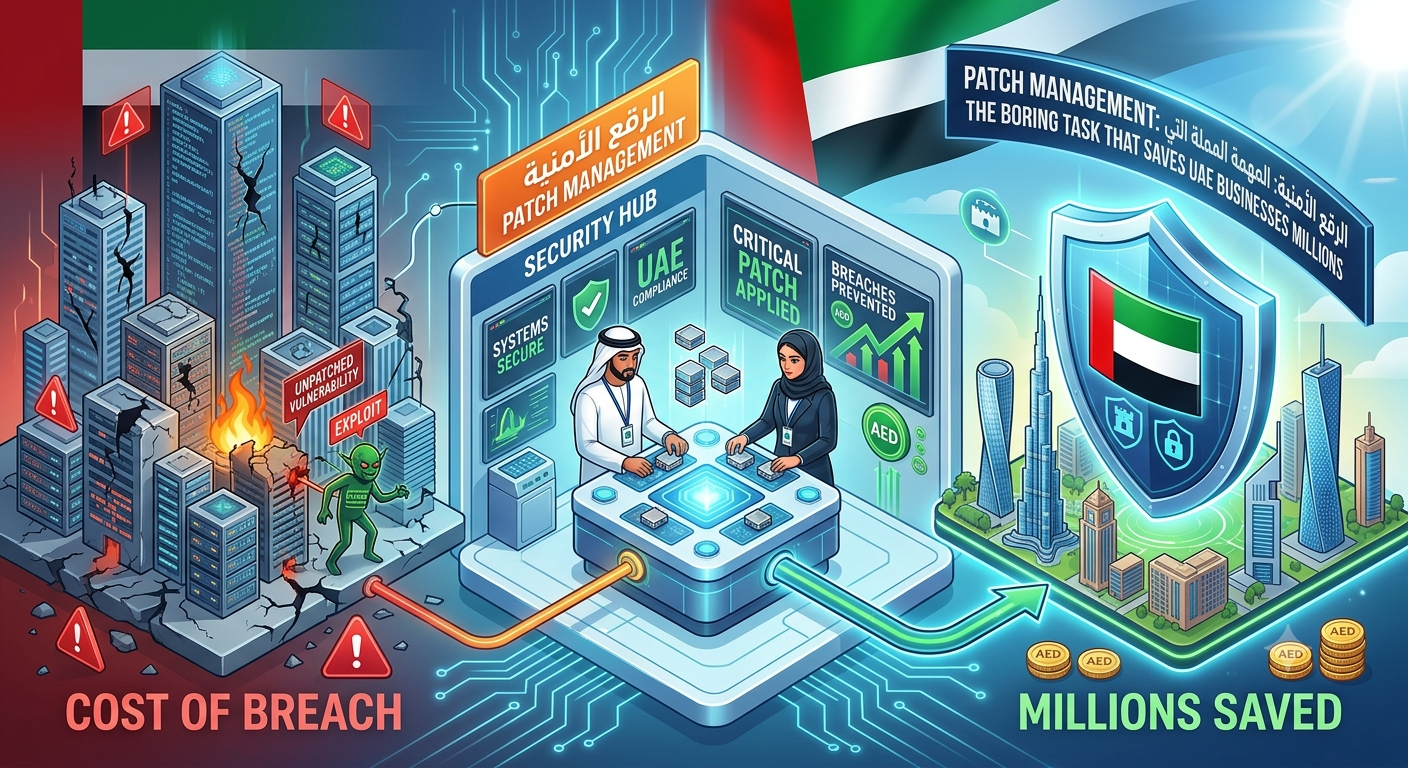
Patch Management: The Boring Task That Saves UAE Businesses Millions
Jul 01, 2026
Introduction
Patch management is not exciting.
It rarely gets attention in board meetings.
It does not feel innovative.
It does not sound strategic.
And that is exactly why many businesses neglect it.
Across Dubai and the UAE, businesses invest heavily in advanced cyber security tools.
Firewalls.
Threat monitoring.
Cloud security.
AI-driven detection.
All important.
Yet many cyber attacks still succeed because of something surprisingly simple.
Unpatched systems.
A missing security update.
An outdated server.
An unpatched application.
That is all attackers often need.
Patch management may feel like a routine IT task.
In reality, it is one of the most powerful cyber security controls a business can implement.
The question is no longer whether patching matters.
The real question is whether your business is patching fast enough.
The Problem: Unpatched Systems Create Easy Attack Opportunities
Attackers love predictable weaknesses.
Unpatched vulnerabilities are exactly that.
They are known weaknesses with publicly available exploit information.
That creates major risk.
Once vulnerabilities are disclosed, attackers begin scanning for exposed systems almost
immediately.
Common patch-related risks include:
● Exploited vulnerabilities
● Ransomware attacks
● Remote compromise
● Data breaches
● System outages
The biggest challenge is complexity.
Modern businesses run dozens or hundreds of systems.
Endpoints.
Servers.
Cloud workloads.
Applications.
Network devices.
Keeping everything updated is difficult.
This creates patching delays.
Even short delays create exposure.
A single missed patch can become the entry point for a major breach.
Attackers actively exploit these windows.
The Solution: Build Strong Patch Management Discipline
Strong patch management reduces attack surface dramatically.
The first step is visibility.
Businesses need clear visibility into every asset requiring updates.
The second step is prioritization.
Critical vulnerabilities should be patched first based on risk and exposure.
The third step is deployment.
Security patches should be applied quickly and consistently.
This is where cyber security Dubai strategies and SOC as a service UAE provide major
value. Continuous monitoring improves vulnerability visibility and helps prioritize high-risk
patching faster.
The fourth step is validation.
Businesses should verify patches were successfully deployed and systems remain secure.
Key patch management priorities include:
● Asset visibility
● Vulnerability tracking
● Patch prioritization
● Rapid deployment
● Continuous validation
The strongest security programs treat patching as ongoing discipline.
Consistency reduces risk.
Real Numbers: Patch Management Cost vs Breach Risk
Approach Typical Annual
Cost
Business Impact
Minimal patch management AED 0–10,000 High vulnerability
exposure
Basic patch management
program
AED
20,000–60,00
0
Reduced exploit risk
Advanced vulnerability
management
AED
60,000–180,0
00
Strong resilience and
visibility
The numbers are clear.
The cost of strong patch management is significantly lower than the financial and operational
damage caused by exploit-driven breaches.
Small updates prevent big problems.
Prevention saves money.
UAE-Specific Security Considerations
For businesses operating in Dubai and across the UAE, patch management directly affects both
cyber resilience and compliance.
Breaches caused by known vulnerabilities can impact PDPL compliance UAE and broader
data protection UAE obligations.
Key patch management priorities include:
● Asset visibility
● Critical patching
● Vulnerability management
● Threat monitoring
● Risk reduction
Businesses handling critical systems or sensitive data should treat patch management as a core
security priority.
Delayed patching creates unnecessary exposure.
Why FortyFi
FortyFi helps businesses across Dubai and the UAE reduce cyber risk through practical
vulnerability management and patching strategies.
From vulnerability assessments and patch planning to monitoring and threat response, the
focus is on reducing attack surface before vulnerabilities become incidents.
The team helps businesses improve visibility, strengthen controls, and reduce exploit-related
risk.
The objective is simple: close security gaps before attackers exploit them.
FAQ
What is patch management?
Patch management is the process of applying security updates to systems, software, and
devices.
Why is patching important?
It fixes known vulnerabilities before attackers exploit them.
How quickly should critical vulnerabilities be patched?
As quickly as possible based on risk and exposure.
Can patching prevent ransomware?
Yes. Strong patching reduces many common attack paths.
Does patch management help compliance?
Yes. It improves security posture and compliance readiness.
Are Unpatched Systems Quietly Increasing Your Risk?
Patch management may seem boring.
But it remains one of the highest-impact security controls.
Businesses that patch faster reduce risk dramatically.
Message FortyFi today for a vulnerability assessment and strengthen your patch management
strategy.