Vibe Coding & AI Development Crisis
How AI-Generated Code Creates Long-Term Vendor Dependence
Jul 01, 2026
Introduction
AI-generated code can create long-term vendor dependence. When your codebase relies on a specific AI tool's patterns and capabilities, switching becomes expensive. UAE enterprises are discovering that AI vendor lock-in is a real risk.
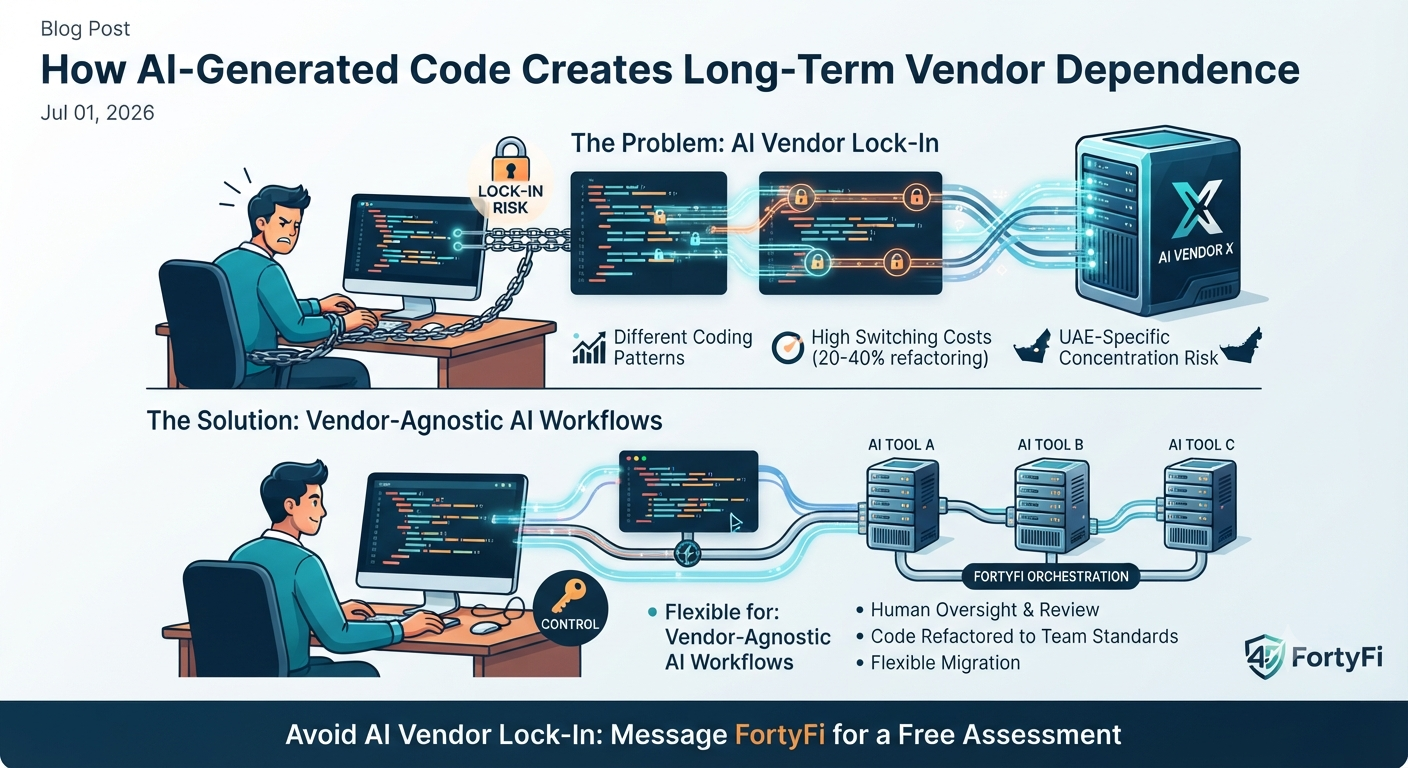
The Problem: AI Vendor Lock-In
Different AI tools generate different coding patterns. Once you're locked into one tool's style, switching to another requires rewriting large sections. Your team becomes dependent on a specific vendor's capabilities and pricing.
The Solution: Vendor-Agnostic AI Workflows
Use AI as an assistant, not a dependency. Maintain human oversight. Review and refactor AI-generated code to follow team standards, not tool patterns. Keep critical code human-authored or thoroughly human-reviewed.
Real Numbers: The Lock-In Cost
Switching AI vendors can cost 20-40% of the original development budget in refactoring. UAE enterprises report 50% higher migration costs due to AI vendor lock-in.
UAE-Specific Security Considerations
Vendor dependence creates concentration risk, especially for regulated sectors. If your AI vendor changes terms, goes out of business, or fails security reviews, you're exposed.
Why FortyFi
FortyFi builds vendor-agnostic AI workflows. Your codebase remains yours—not your AI tool's.
FAQ
What is AI vendor lock-in? Dependence on a specific AI tool's patterns and capabilities. How do I avoid it? Maintain human oversight, refactor AI code to team standards, and keep critical code human-authored. What's the cost of vendor lock-in? 20-40% of original development budget for migration.
Avoid AI Vendor Lock-In
Message FortyFi on WhatsApp for a free vendor lock-in assessment.