Cybersecurity
Data Encryption Requirements Under UAE Law: A Plain-English Guide
Jul 01, 2026
Introduction
Data moves everywhere in modern business.
Across laptops.
Cloud platforms.
Mobile devices.
Email systems.
APIs.
Payment systems.
Databases.
That creates efficiency.
It also creates risk.
Every time sensitive data is stored, transferred, or accessed, it becomes a potential target for
attackers. If that data is exposed, stolen, or intercepted, the financial and reputational damage
can be severe.
This is where encryption becomes essential.
Encryption is one of the most effective ways to protect sensitive information. It transforms
readable data into protected information that cannot be easily understood without authorized
access.
Simple in concept.
Critical in practice.
For businesses across Dubai and the UAE, encryption is no longer just a technical best
practice. It is increasingly tied to privacy, compliance, and risk management obligations.
The question is no longer whether encryption matters.
The real question is whether your business is using it properly.
The Problem: Sensitive Data Without Encryption Creates Major Risk
Many businesses still underestimate encryption.
They assume firewalls, access controls, and passwords are enough.
Those controls matter.
But they are not sufficient on their own.
Without encryption, stolen data is often immediately usable.
That creates serious exposure.
Common unencrypted data risks include:
● Customer data exposure
● Financial data theft
● Credential compromise
● Email interception
● Cloud storage leaks
The challenge is complexity.
Sensitive data often exists across multiple environments.
Cloud platforms.
Employee devices.
Third-party tools.
Internal servers.
Backup systems.
Without clear encryption standards, gaps appear quickly.
This creates hidden risk.
A single weak point can expose highly sensitive information.
Attackers actively target these gaps.
The Solution: Encrypt Data at Rest and in Transit
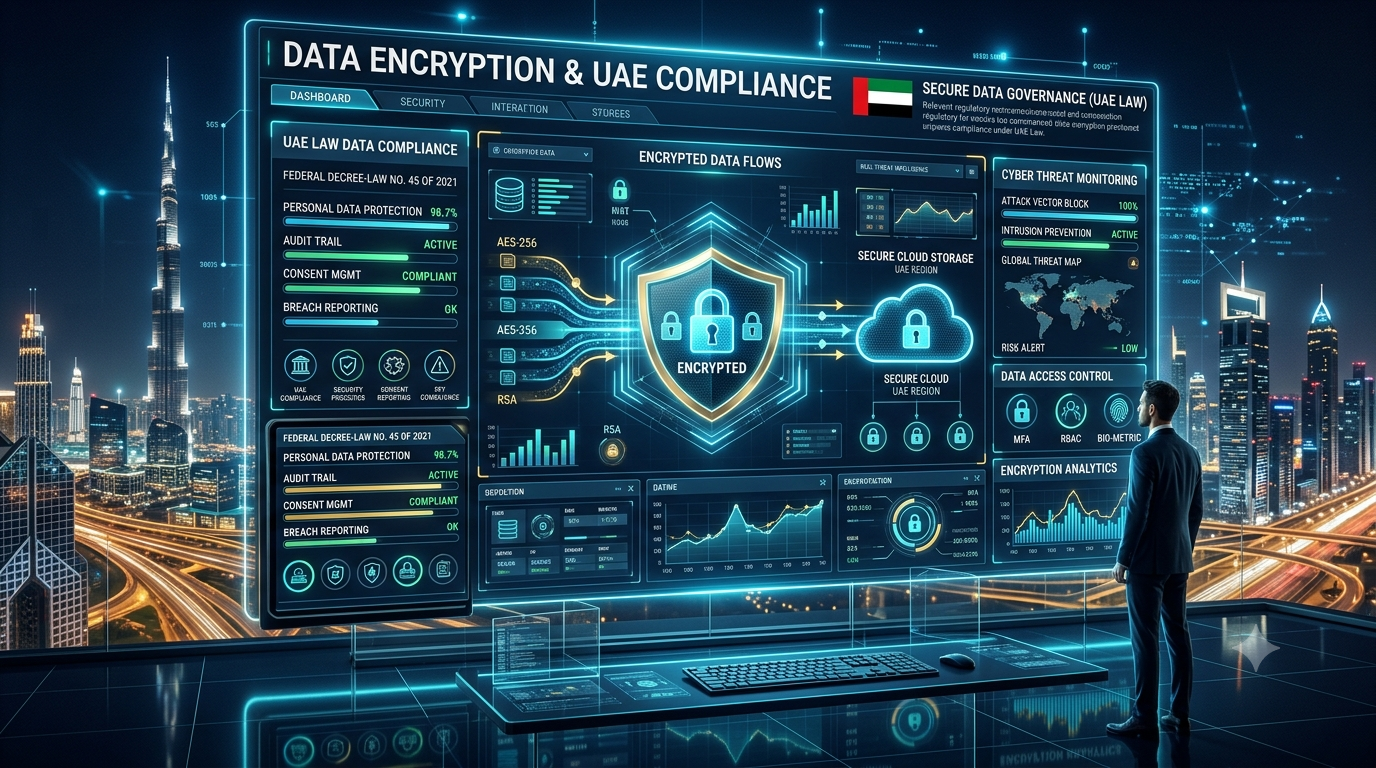
Strong encryption strategies focus on protecting data in all major states.
The first layer is encryption at rest.
Sensitive data stored in databases, servers, devices, or backups should be encrypted.
The second layer is encryption in transit.
Data moving across networks, APIs, cloud services, or communication systems should be
protected using secure protocols.
The third layer is access control.
Encryption is strongest when paired with secure key management and strict access controls.
This is where cyber security Dubai strategies and SOC as a service UAE provide major
value. Continuous monitoring improves visibility into sensitive systems and helps detect
suspicious activity involving protected data.
Key encryption priorities include:
● Database encryption
● Device encryption
● Cloud encryption
● Secure communications
● Key management
The strongest security strategies combine encryption with visibility and control.
Protection must be layered.
Real Numbers: Encryption Cost vs Data Breach Risk
Approach Typical
Annual
Cost
Business Impact
Minimal encryption controls AED
0–15,000
High data exposure
Basic encryption strategy AED
25,000–8
0,000
Reduced data risk
Advanced encryption and data
security program
AED
80,000–2
50,000
Strong protection and
compliance readiness
The numbers are clear.
The cost of implementing strong encryption is significantly lower than the financial and
reputational damage caused by data breaches.
Strong protection reduces long-term exposure.
Data security protects trust.
UAE-Specific Security Considerations
For businesses operating in Dubai and across the UAE, encryption plays an important role in
PDPL compliance UAE and broader data protection UAE obligations.
While laws focus heavily on protecting personal and sensitive data, businesses should treat
encryption as a practical safeguard for reducing breach impact.
Key encryption priorities include:
● Customer data protection
● Secure storage
● Secure transmission
● Access control
● Breach risk reduction
Businesses handling personal, financial, or sensitive operational data should treat encryption as
essential.
Weak protection creates unnecessary risk.
Why FortyFi
FortyFi helps businesses across Dubai and the UAE strengthen data protection through
practical encryption and cyber security strategies.
From encryption assessments and architecture reviews to threat monitoring and compliance
support, the focus is on reducing risk across critical systems and sensitive data environments.
The team helps businesses improve visibility, strengthen controls, and secure sensitive
information.
The objective is simple: protect valuable data before attackers can exploit weak points.
FAQ
What is data encryption?
Encryption converts readable data into protected data that requires authorized access to read.
Why is encryption important?
It protects sensitive data from theft, interception, and unauthorized access.
Should businesses encrypt cloud data?
Yes. Sensitive cloud data should always be encrypted.
Is encryption enough by itself?
No. Encryption should be combined with access control and monitoring.
Does encryption help compliance?
Yes. Strong encryption supports data protection and compliance readiness.
Is Sensitive Business Data Fully Protected?
Sensitive data creates business value.
It also creates serious responsibility.
Businesses that strengthen encryption dramatically reduce risk.
Message FortyFi today for a data protection assessment and strengthen your encryption
strategy across critical systems.