Cybersecurity
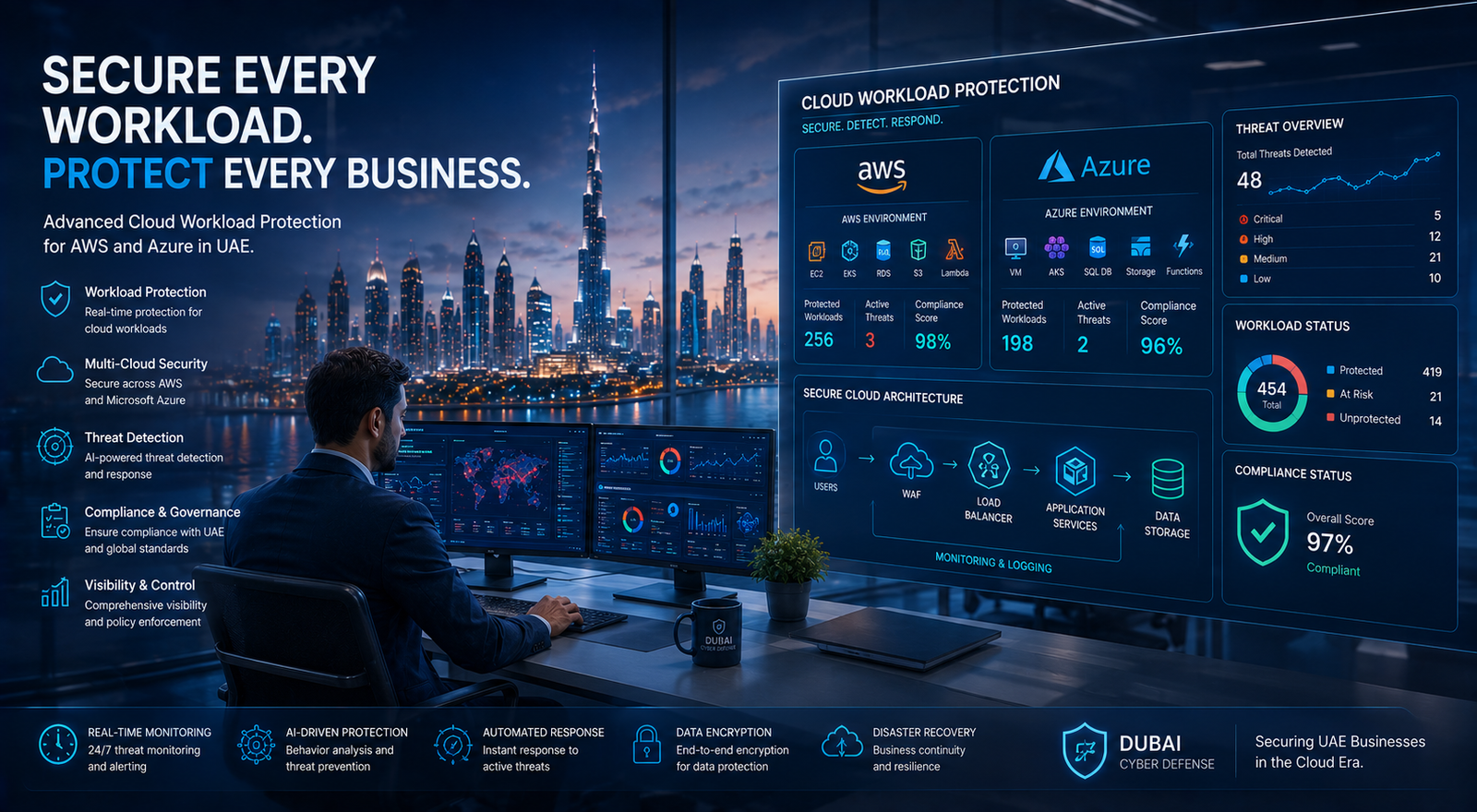
Cloud Workload Protection for UAE Companies Running on AWS or Azure
Jul 01, 2026
Introduction
Cloud adoption across Dubai and the UAE is accelerating fast.
Businesses are moving applications, databases, APIs, and workloads to cloud environments to
improve speed, scalability, and efficiency.
The benefits are significant.
Faster deployment.
Better flexibility.
Lower infrastructure overhead.
Improved business agility.
But cloud migration does not eliminate security risk.
It changes it.
Many businesses assume cloud providers handle all security.
That is a costly misunderstanding.
Providers like AWS and Microsoft Azure secure the cloud infrastructure.
Businesses remain responsible for securing workloads inside those environments.
That includes applications, data, identities, configurations, and access controls.
This is where cloud workload protection becomes essential.
The question is no longer whether cloud security matters.
The real question is whether your workloads are protected well enough to resist modern threats.
The Problem: Cloud Workloads Create New Attack Surfaces
Cloud workloads create enormous flexibility.
They also create new security challenges.
That creates hidden risk.
Misconfigurations, excessive permissions, exposed APIs, weak identity controls, and
unmonitored workloads create major attack opportunities.
Common cloud workload risks include:
● Misconfigured cloud resources
● Identity compromise
● API attacks
● Unpatched workloads
● Data exposure
The biggest issue is visibility.
Many businesses struggle to maintain clear visibility across rapidly growing cloud environments.
Cloud workloads scale quickly.
Security complexity grows with them.
A single misconfigured workload can expose critical applications or sensitive business data.
Attackers actively scan cloud environments for these weaknesses.
Cloud speed increases opportunity for both businesses and attackers.
The Solution: Secure Workloads with Visibility and Continuous Monitoring
Strong cloud workload protection focuses on visibility, control, and continuous monitoring.
The first layer is workload visibility.
Businesses need full visibility into cloud assets, workloads, containers, APIs, and access
patterns.
The second layer is configuration security.
Misconfigurations should be identified and fixed quickly.
The third layer is identity and access control.
Only authorized users, workloads, and systems should access sensitive resources.
This is where cyber security Dubai strategies and SOC as a service UAE provide major
value. Continuous monitoring improves threat detection across cloud environments and helps
businesses respond faster.
The fourth layer is workload protection.
Security controls should detect suspicious behavior, unauthorized changes, and active threats.
Key cloud workload protection priorities include:
● Cloud visibility
● Configuration security
● Identity protection
● Threat monitoring
● Incident response readiness
The strongest cloud security strategies focus on prevention and rapid detection.
Visibility creates resilience.
Real Numbers: Cloud Security Cost vs Breach Risk
Approach Typical Annual
Cost
Business Impact
Minimal cloud security AED 0–20,000 High workload exposure
Basic cloud security program AED
30,000–100,000
Reduced cloud risk
Advanced cloud workload
protection
AED
100,000–300,00
0+
Strong resilience and
visibility
The numbers are clear.
The cost of strong cloud workload protection is significantly lower than the financial and
operational damage caused by cloud-related breaches.
Prevention reduces exposure.
Visibility improves control.
UAE-Specific Security Considerations
For businesses operating in Dubai and across the UAE, cloud security directly affects both
resilience and compliance.
Cloud breaches involving sensitive data can impact PDPL compliance UAE and broader data
protection UAE obligations.
Key cloud security priorities include:
● Workload visibility
● Secure configuration
● Access control
● Threat detection
● Data protection
Businesses running critical workloads in the cloud should treat cloud security as a strategic
priority.
Cloud growth must be matched by strong protection.
Why FortyFi
FortyFi helps businesses across Dubai and the UAE secure modern cloud environments
through practical cloud security and cyber resilience strategies.
From workload assessments and configuration reviews to monitoring and threat response, the
focus is on reducing cloud-related risk before incidents occur.
The team helps businesses improve visibility, strengthen controls, and secure critical cloud
workloads.
The objective is simple: protect cloud environments against modern threats.
FAQ
What is cloud workload protection?
It protects cloud-hosted applications, workloads, and data from cyber threats.
Are AWS and Azure secure by default?
Their infrastructure is secure, but businesses remain responsible for workload security.
What is the biggest cloud security risk?
Misconfiguration remains one of the most common risks.
Why is workload visibility important?
It helps identify threats, vulnerabilities, and unauthorized activity faster.
Does cloud security help compliance?
Yes. Strong controls improve resilience and compliance readiness.
Are Your Cloud Workloads Secure Enough?
Cloud environments create speed and flexibility.
They also create new cyber risks.
Businesses that improve workload visibility and protection dramatically reduce exposure.
Message FortyFi today for a cloud security assessment and strengthen your AWS or Azure
security strategy.