Cloud & Infrastructure
Cloud-Native vs Traditional Hosting for UAE Web Applications
Jul 01, 2026
Introduction
Choosing between cloud-native and traditional hosting is one of the most fundamental decisions for UAE web applications. The choice affects agility, cost, compliance, and long-term scalability.
The Problem: Old Models Don't Fit New Needs
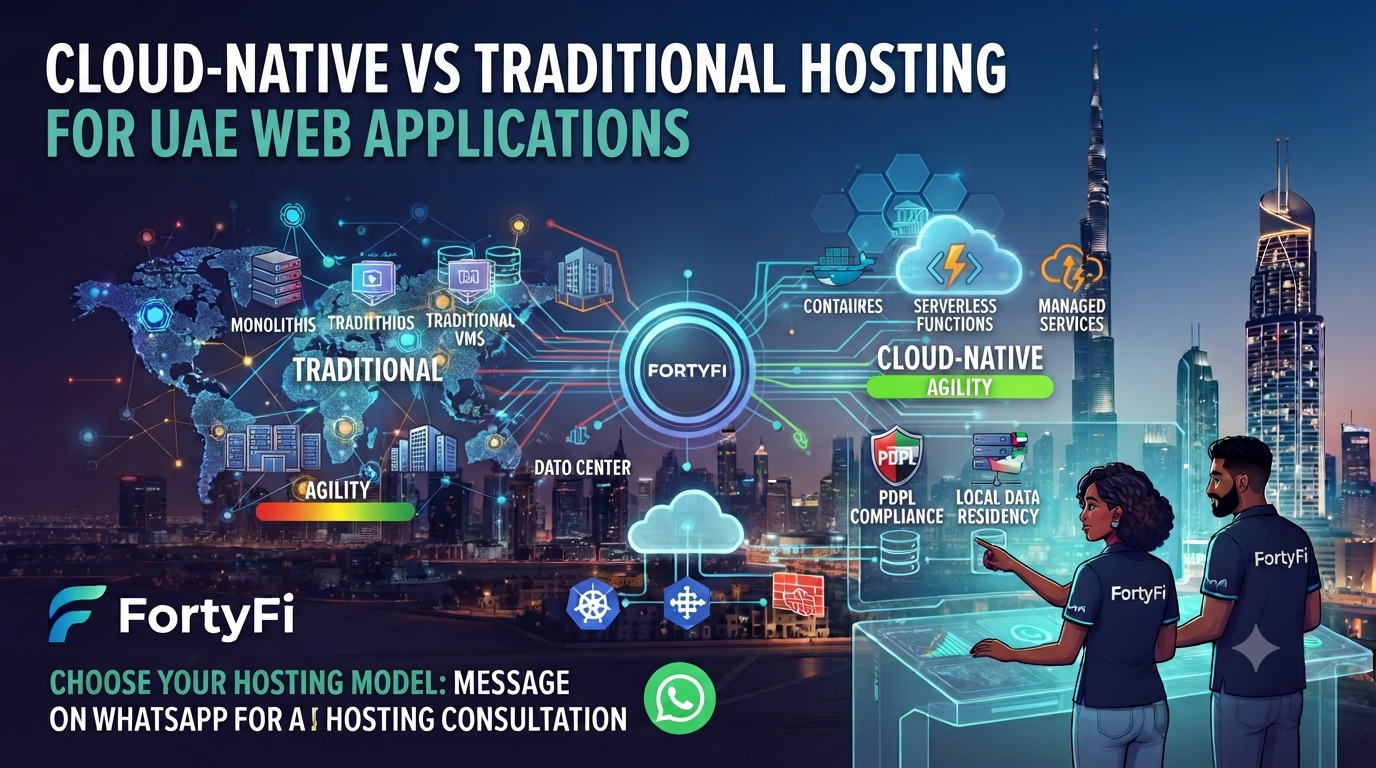
Traditional hosting (VMs, dedicated servers) offers control but lacks scalability. Cloud-native (containers, serverless, managed services) offers agility but requires new skills. Many UAE enterprises stick with what they know—and miss out on innovation.
The Solution: Match Model to Application
Cloud-native suits modern, microservices-based applications needing auto-scaling and rapid iteration. Traditional hosting suits legacy applications, predictable workloads, or compliance-bound systems. A hybrid approach often works best—cloud-native for customer-facing apps, traditional for internal systems.
Real Numbers: The Difference
Cloud-native applications deploy 80% faster and scale automatically. Traditional hosting costs are predictable but lack elasticity. UAE enterprises report 30-50% lower operational costs with cloud-native for variable workloads.
UAE-Specific Security Considerations
PDPL compliance applies regardless of model. Sovereign cloud providers offer cloud-native capabilities with local data residency. Talent availability may influence your choice.
Why FortyFi
FortyFi helps UAE businesses choose and implement the right hosting model for their applications.
FAQ
What's cloud-native? Applications built for cloud environments using containers, microservices, and managed services. Which is more compliant? Both can be compliant—it depends on implementation, not the model.
Choose Your Hosting Model
Message FortyFi on WhatsApp for a free hosting consultation.